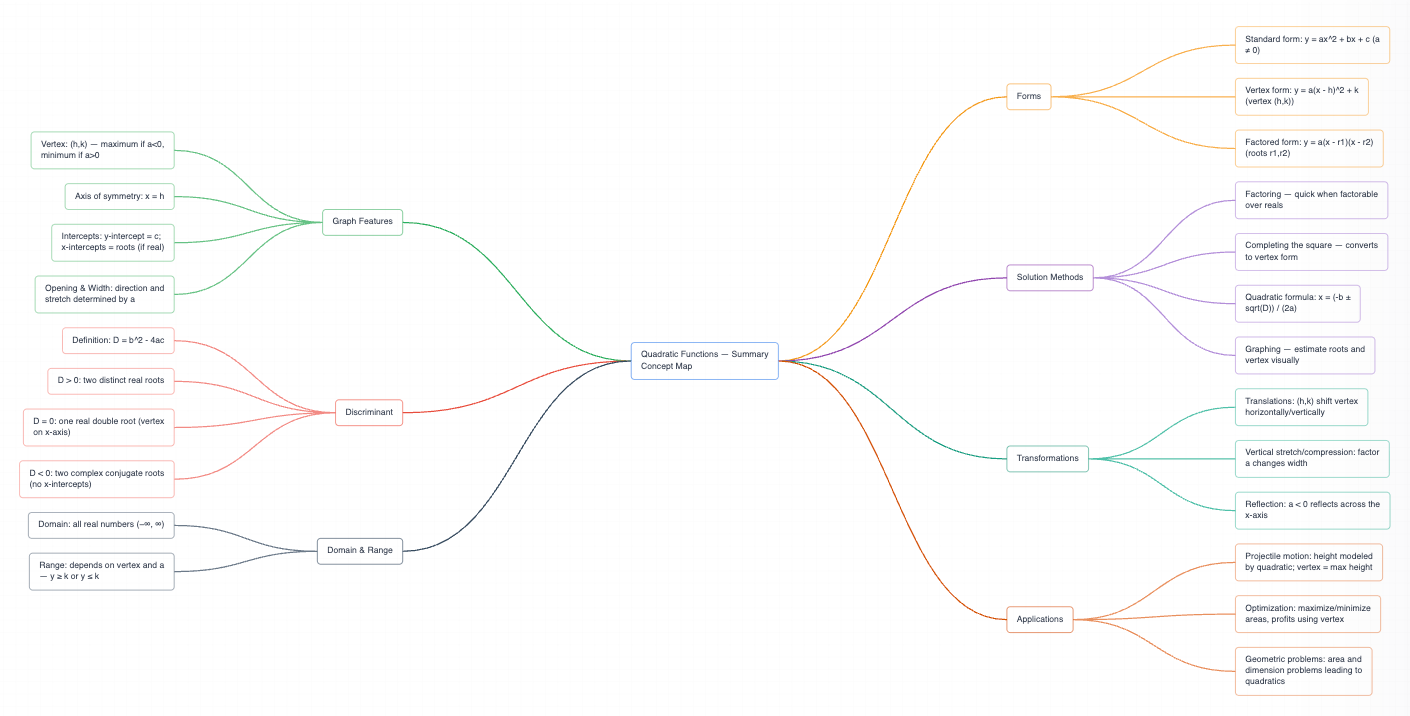
Lesson Kickoff or Review
Open class with a single-page map of factoring methods to set context and vocabulary. Students see how techniques connect and when to use each.
This template visualizes a complete factoring techniques overview—GCF, quadratics, grouping, special products, perfect squares, and synthetic division—with cues and examples.
Sample data
Get started
Turn your factoring notes into a professional concept map in minutes—clear, consistent, and ready to teach.
or upload your data file
What you get
A polished, ready-to-edit map of core factoring methods so you can explain concepts clearly and help learners solve problems faster.
Customize
Add branches like GCF, Quadratic Trinomials, Grouping, and more. Include use-cases, recognition cues, and example equations.
Apply colors per category, tweak node order, and simplify labels for your grade level or exam board.
Preview instantly, export for slides or LMS, or share a link. Update anytime as your lesson evolves.
Use cases
Open class with a single-page map of factoring methods to set context and vocabulary. Students see how techniques connect and when to use each.
Export the concept map as a handout. Clear examples and cues help learners pick the right method under time pressure.
Drill down from strategy to examples. Quickly diagnose gaps—GCF first, then trinomials, grouping, and special products.
Unify department language around factoring. Standardize examples and prerequisites so every teacher teaches from the same playbook.
AI tools
Create similar charts with these tools
Templates
Start with professionally designed templates